

-300x300.jpg&w=48&q=75) Author: Veress Árpád · Explosion-protection expert
Author: Veress Árpád · Explosion-protection expertOperational Ex Responsibility: What IEC TS 60079-44 Expects from the Control Room
Explosion safety is often framed as a specialist discipline handled by Ex engineers and inspection bodies. IEC TS 60079-44:2023 takes a different line: operating a facility in a hazardous area is itself a competence area. Operations must be able to recognise conditions that affect explosion safety, control the work, make defensible decisions and bring in the right competent people. This article condenses §8.9 into a six-step operational loop and sets out the practical toolbox behind it. It closes on the reference to ISO 80079-36 ignition sources, which extends operational Ex responsibility beyond electrical equipment.
✅operational responsibility in terms of Ex🏭
IEC TS 60079-44:2023 is useful here because it makes an important point very clearly: facility operation in hazardous areas is itself a competence area.
The Operational Head does not need to personally perform every specialist Ex task, but operations must be competent to recognize conditions affecting explosion safety, control the work, make operational decisions, and involve the right competent people.
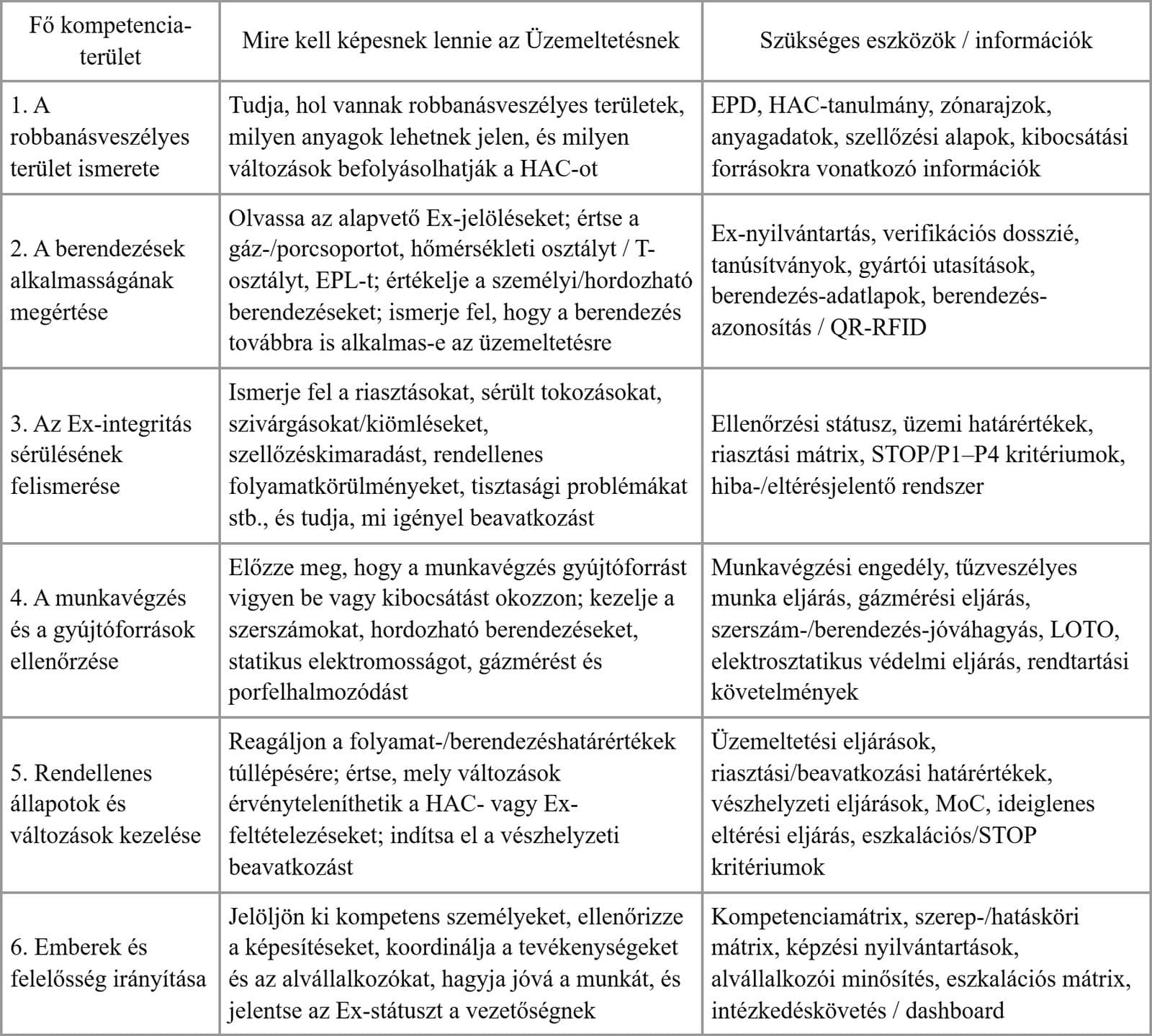
I summarize 8.9 into six operational competence topics, each of which needs supporting tools - see picture below
KNOW - Where are my hazardous areas and why?
↓
RECOGNISE Has something changed that could affect explosion protection?
↓
VERIFY Is the equipment, person, tool and activity suitable for this location?
↓
CONTROL Can the work/process continue safely, and under what conditions?
↓
ACT Normal operation / mitigation / escalation / STOP / emergency response.
↓
DOCUMENT What happened, who decided, what was done, and has the condition been properly closed?
📝The Operational Ex Toolbox🔖
If I translate IEC TS 60079-44 §8.9 into what an Operational Head should actually have available on Monday morning:
- Technical information: EPD + HAC/zone drawings + hazardous-material information + Ex Register + Verification Dossier + certificates/instructions.
- Operational control: operating limits + alarm response + Permit-to-Work + LOTO + gas testing + ignition-source controls + electrostatic controls + housekeeping requirements + emergency procedures.
- Lifecycle management: inspection status + open Ex findings + STOP/P1–P4 methodology + corrective actions + MoC + temporary deviations + repair/reinspection + closure + asset lifetime history.
- Organization: competence matrix + roles/responsibilities + contractor competence + decision authority + escalation route.
Operations must have sufficient competence to understand the Ex-conditions under which the facility is allowed to operate, recognize when those conditions are changing or have been violated, and initiate the appropriate response.
- Competence - Do I understand what I am looking at?
- Tools - Do I have the current information and procedures needed to make the decision?
- Authority - Can I control the work, escalate the problem or ultimately say STOP?
And IEC TS 60079-44 §8.9 gives quite a strong technical basis for treating this as a defined Operational Ex Competence, rather than simply giving operations a general Ex-awareness course.
One additional point I particularly like in §8.9 is its explicit reference to the principal ignition sources from ISO 80079-36. That helps bridge electrical and non-electrical explosion protection: operational Ex responsibility is about controlling ignition risk across the facility, not merely checking electrical Ex equipment.